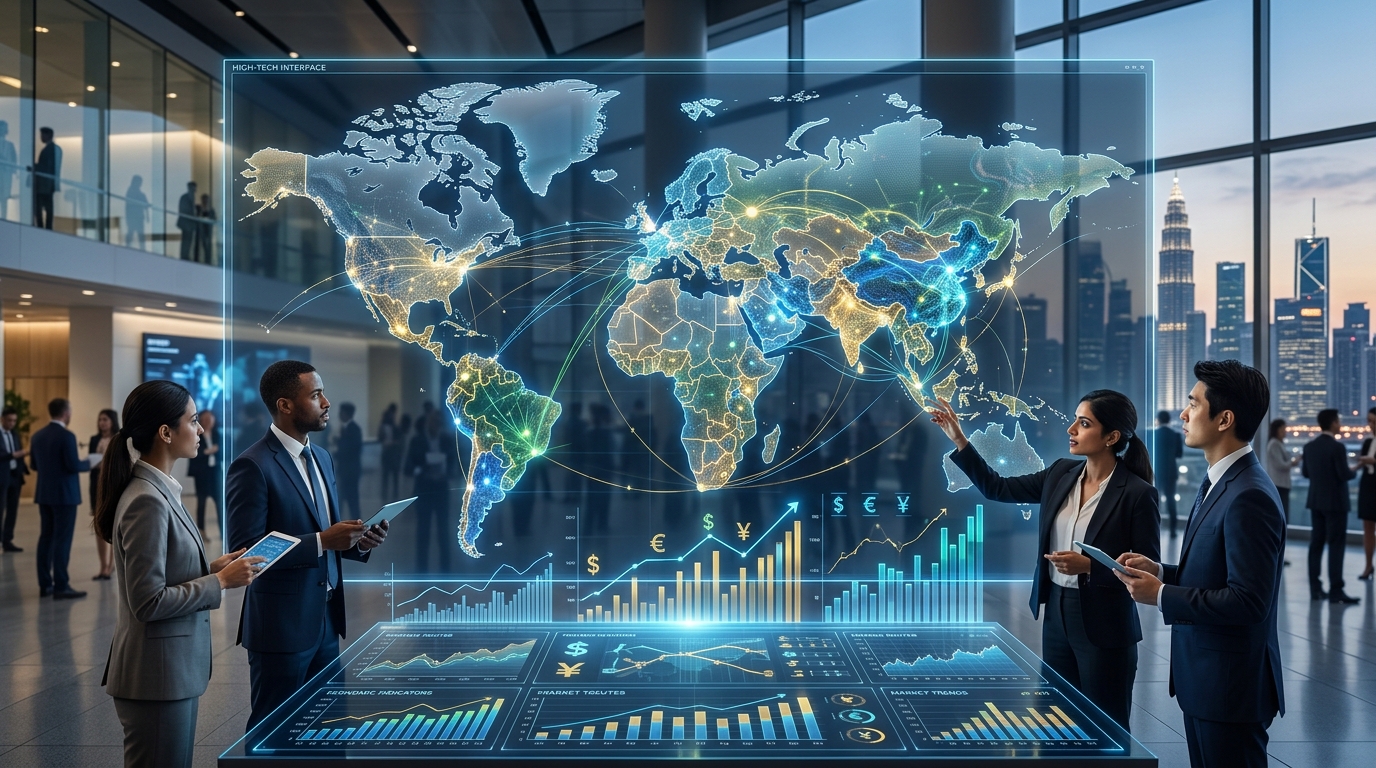
Profound Shifts Reshaping the Map of New Economic Powers in the 21st Century
Strong Introduction: The Era of Accelerating Economic Changes
The world today is witnessing a profound transformation in the structure of economic powers, a transformation that goes beyond a mere exchange of positions to alter the very nature of global economic interaction. As we enter new decades of the 21st century, the pace of geopolitical, technological, and demographic changes is accelerating, shaping the contours of a new economic map that is no longer limited to the traditional powers that defined the global landscape for long decades. The ability to understand and analyze these transformations has become an essential prerequisite for any entity seeking to maintain or enhance its position in this rapidly changing world, be it nations, companies, or even individuals striving to adapt to a completely different global economic reality.
What distinguishes this stage is the complex interplay between economic, political, and social factors, where trade intertwines with national security, technological innovations impact global labor markets, and environmental challenges impose a new model for sustainable development. These factors collectively contribute to redefining the concept of economic power, which is no longer measured by GDP alone, but now includes the capacity for innovation, control over vital supply chains, securing strategic resources, attracting global talent, and possessing digital influence. This article will delve into analyzing these variables to understand the nature of emerging powers and the challenges faced by established powers, and how the features of the global economic future are being shaped.
Background and Context: From Unipolarity to Economic Multipolarity
The United States and its Western allies have long dominated the global economic system since the end of World War II, benefiting from the Bretton Woods system and their industrial and technological superiority. This system, which lasted for decades, established the rules of international trade and finance, and strengthened the influence of global financial institutions such as the International Monetary Fund and the World Bank, which largely reflected Western interests. The post-Cold War period saw a reinforcement of this superiority with the collapse of the Soviet Union, creating what can be described as economic unipolarity led by Washington, which was based on the principles of globalization and trade openness.
However, the seeds of change gradually began to be sown with the rise of East Asian economies in the late 20th century, and this pace accelerated remarkably at the turn of the new millennium, especially after China's accession to the World Trade Organization in 2001. This event was not merely the addition of a new player, but a pivotal turning point that unleashed immense economic power, which began to challenge existing economic models and offer new alternatives for development. The 2008 global financial crisis also contributed to exposing the weaknesses of the Western economic system, reinforcing calls for change and paving the way for emerging powers to demand a greater role in shaping the future of the global economy.
Today, we are witnessing a clear shift towards economic multipolarity, where there is no longer a single dominant pole, but rather several centers of power that compete and cooperate simultaneously. This multipolarity does not necessarily imply inevitable conflict, but rather reflects a more complex and dynamic reality, requiring a deeper understanding of new balances and shifting alliances. The emergence of economic blocs like BRICS and initiatives such as the Belt and Road, along with an increasing focus on regional supply chains and the shift towards the digital economy, are all indicators that old rules are no longer sufficient to explain or guide the paths of growth and prosperity in the 21st century.
Details and Key Facts: Numbers Shaping the Features of Change
Global economic data clearly shows the extent of the transformation that has occurred on the map of economic powers. Just two decades ago, advanced economies held the lion's share of global GDP, but today, this gap has significantly narrowed. For example, while the United States still ranks first globally in terms of nominal GDP, China has already surpassed its American counterpart in terms of GDP by Purchasing Power Parity (PPP), reflecting its true economic strength and immense purchasing power within its borders. These figures are not just statistics; they are indicators of a shift in the balance of economic weight from West to East.
Alongside China, India has emerged as a formidable rising economic power, supported by a young and educated demographic, and rapid growth in the technology and services sectors. Many economists predict that India will become the world's third-largest economy in the next few years, surpassing Germany and Japan. Furthermore, countries like Indonesia, Turkey, Mexico, Brazil, and even emerging economies in Africa such as Nigeria, Egypt, and South Africa, have begun to play more significant roles on the global economic stage, benefiting from their natural resources, strategic geographical locations, or their ability to attract foreign direct investments. These countries collectively contribute to fragmenting the previous economic concentration and distributing power across broader geographical regions.
The change is not limited to nations alone but extends to include non-governmental economic powers, specifically global tech giants. Companies like Apple, Amazon, Google, and Microsoft have market values exceeding the GDP of many countries, and they now wield unprecedented influence in shaping markets, directing innovation, and even impacting government policies. These companies, thanks to their ability to collect big data and control digital infrastructure, represent a new type of economic power that transcends geographical boundaries and affects the lives of billions of people, posing new challenges for governments in how to regulate them and deal with their growing influence.
Impact and Importance: Redefining Global Economic Relations
The reshaping of the new economic power map carries profound implications at both local and global levels, directly affecting how trade, investment, and development are managed. Globally, these transformations lead to a shift in geopolitical power balances, as emerging nations gain greater weight in international forums and demand representation commensurate with their economic size. This means that decisions related to international trade, climate change, and global security will become more complex and require consensus among a larger number of parties, which may lead to slower decision-making or the emergence of new alliances transcending traditional geographical regions.
Locally, these changes compel nations and regions to re-evaluate their economic strategies. Reliance on old growth models is no longer sufficient; governments must invest in innovation and technology, work to develop human capital, and diversify their economies away from dependence on a single sector or trade partner. The challenge also lies in ensuring that the economic growth resulting from these transformations benefits all segments of society, not just a specific group, in order to address issues such as increasing economic inequality, which can lead to social and political unrest.
Furthermore, this new map impacts global supply chains, as companies and governments have begun to re-evaluate the risks of over-reliance on single sources of production, especially in light of recent crises such as the COVID-19 pandemic and geopolitical tensions. This leads to a trend towards reshoring industries or friend-shoring them, which reshapes the global production and trade map and creates new opportunities for certain countries to become regional or global production hubs in specific sectors. These transformations mean that flexibility and adaptability will be more crucial than ever to maintain economic stability and sustainable growth.
Opinions and Analyses: A Reading of Future Trends
Experts and analysts hold varying opinions on the future of this new economic map; while some believe we are heading towards a multipolar world characterized by a greater balance of power and broader growth opportunities, others warn of the risks of geoeconomic fragmentation and increasing protectionism. Many economists argue that the rise of China and India does not merely represent a shift in GDP, but a transformation in development models themselves, as these countries offer alternatives to the liberal Western model, with a focus on the state's role in economic development and long-term planning. These models may attract many developing countries seeking to achieve growth without abandoning their sovereignty or cultural values.
On the other hand, analysts point out that traditional economic powers, particularly the United States and the European Union, still possess strong structural advantages that cannot be ignored. The United States maintains unparalleled superiority in technological innovation, high investment attractiveness, and a military power that remains the largest globally, in addition to the dominance of the US dollar in the global financial system. Meanwhile, the European Union boasts a massive internal market, advanced industrial capacity, and a strong commitment to environmental and social standards that may become global benchmarks in the future. These powers are still capable of adaptation and innovation, and may witness new strategies to enhance their competitiveness in the face of challenges.
There are also those who focus on the structural challenges facing the rising powers themselves. China, for example, faces significant demographic challenges, rising debt levels, and an urgent need to transition from an export and investment-driven growth model to one based on domestic consumption and innovation. India, despite its immense potential, still faces challenges related to infrastructure, providing employment opportunities for a huge number of young people, and addressing social and economic disparities. These challenges mean that the path of these powers' ascent is not free of obstacles, and that the global economic future will be more dynamic and changing than we anticipate, requiring continuous analysis and flexibility in response.
Forecasts and the Future: Features of a Changing Economic World
Looking to the future, we can expect these profound transformations to continue, with the emergence of a more complex and balanced economic world. Asia, led by China and India, is likely to maintain its leadership in global economic growth, benefiting from the size of its domestic markets and its ability to absorb new technology. However, this ascent will not be without challenges, as competition for resources and energy will intensify, and geopolitical tensions may escalate, requiring more astute economic diplomacy and multifaceted strategies to ensure stability and prosperity.
The coming decade will also witness an increasing importance of the digital economy and technological innovation as a driving force for growth. Countries and regions that invest heavily in artificial intelligence, quantum computing, biotechnology, and renewable energy will be at the forefront of new economic powers, regardless of their current size. This means that the race for technological superiority will not be confined to major powers but will also include smaller nations that adopt smart strategies in specialization and innovation, and succeed in building nurturing environments for talent and startups.
Furthermore, environmental issues and climate change will play a pivotal role in reshaping the economic map. The transition towards green and sustainable economies is not merely an ethical choice but an economic necessity that opens new horizons for investment and innovation in areas such as renewable energy, the circular economy, and clean technology. Countries and companies that embrace these transformations early will be the long-term winners, while entities that adhere to old models reliant on fossil fuels may fall behind. This shift will create new economic powers based on green resources and sustainable solutions, redefining concepts of wealth and progress.
Finally, we can expect a strengthening role for regional blocs and multilateral alliances as tools for economic protection and influence enhancement. In a world of increasing uncertainty, nations will seek to build stronger partnerships with their neighbors and like-minded partners, whether through free trade agreements, joint infrastructure projects, or coordination in economic policies. These alliances will not replace global organizations but will complement them, providing a framework for cooperation that ensures the interests of members in facing common global challenges, underscoring the importance of economic diplomacy in shaping a more stable and prosperous future.
Conclusion: A Call to Reflect and Adapt to the New Reality
The new map of economic powers in the 21st century is not merely a fleeting development but a structural transformation reshaping the foundations of the global order. We have bid farewell to the era of unipolar dominance and entered a phase characterized by multipolarity, complexity, and increasing interconnectedness, where diverse economic powers compete and cooperate in a dynamic landscape that never ceases to change. Understanding these transformations is not an intellectual luxury but a strategic necessity for any government, institution, or individual wishing to remain relevant and prosperous in this new world.
This new map requires all of us to adopt a flexible and adaptable mindset, and to be prepared to rethink old assumptions, embrace innovation, and invest in the future. The ability to adapt to rapid technological changes, address urgent environmental challenges, and build more inclusive and sustainable economies are the keys to success in the coming decades. The challenge lies not only in determining who will be the dominant economic power, but in how to build a more just, stable, and resilient global economic system that benefits everyone.
In conclusion, this major transformation invites us to reflect deeply on our role as individuals and societies in shaping this economic future. Will we choose competition and conflict, or will we move towards cooperation and partnership to build a better world? The answer to this question will determine not only the shape of the economic map but also the destiny of humanity as a whole in this century, which is full of both opportunities and challenges.
Related Articles

How Geopolitical Tensions and Advanced Technology Reshape the Global Economy
A comprehensive analysis of the impact of geopolitical conflicts, the artificial intelligence revolution, and the debt crisis on restructuring the global economy, changing power balances, and the movement of emerging and advanced markets.
The Future of the Global Economy in Light of Digital Transformation
The global economy is undergoing an unprecedented radical transformation driven by the digital revolution. From artificial intelligence to the Internet of Things and blockchain, these technologies are reshaping industries, creating new business models, and changing the nature of work. This article provides a comprehensive overview of the immense opportunities offered by this transformation, along with the significant challenges that must be addressed to ensure a more inclusive and sustainable economic future.
The Impact of Artificial Intelligence on the Labor Market and Jobs
The world is witnessing an unprecedented technological revolution led by artificial intelligence. This revolution is fundamentally reshaping the concepts of work and jobs. Explore with us how the global labor market is preparing for these fundamental transformations and what that means for the future of millions of workers and job seekers.