
The Future of the Global Economy in Light of Digital Transformation
Amidst the accelerating pace of technological changes, the global economy finds itself on the cusp of a new era, shaped by the tools and innovations of digital transformation. Digitalization is no longer merely a tactical option; it is a fundamental driving force redefining production, consumption, trade, and even the very concept of value. It is a revolution that spares no sector, from industry and finance to health and education, promising unlimited horizons while simultaneously carrying critical challenges.
Main Drivers of Digital Transformation:
The technological pillars supporting this transformation are numerous and accelerating. Foremost among them are Artificial Intelligence (AI) and machine learning, which open new horizons in big data analysis, automation, and smart decision-making. Following them is the Internet of Things (IoT), which connects billions of devices and systems, generating vast amounts of data that can be leveraged to improve efficiency and innovation. Big Data and cloud computing also play a pivotal role in enabling companies and governments to process and analyze this data effectively. And Blockchain technology cannot be overlooked, as it promises a radical change in the way transactions, trust, and cybersecurity are managed.
Promising Opportunities Offered by Digital Transformation:
- Increased Productivity and Efficiency: Automation and artificial intelligence enable the improvement of industrial and service processes, cost reduction, and increased production speed, which positively impacts economic growth.
- Innovative Business Models and New Markets: Digitalization has led to the emergence of giant companies entirely reliant on technology (such as e-commerce platforms, digital financial services Fintech, and sharing economy platforms), opening new markets and creating job opportunities that did not exist before.
- Financial and Economic Inclusion: Digital technologies can provide access to financial services, healthcare, and education for underserved communities, reducing economic disparities and supporting inclusive development.
- Accelerated Innovation: Digital tools provide a fertile environment for innovation, where startups and developers can transform ideas into products and services with unprecedented speed and efficiency.
- Improved Quality of Life: From smart cities to remote healthcare, digital technologies contribute to providing better and more personalized services to citizens.
Challenges and Critical Risks:
Despite the enormous opportunities, the global economy faces significant challenges amidst digital transformation:
- Labor Market Disruption: Automation and artificial intelligence may displace traditional jobs, requiring massive investment in retraining the workforce and developing new skills compatible with future demands.
- Exacerbation of Inequality: Unequal access to or ability to use digital technologies may deepen the gap between rich and poor nations, and between high-skilled and low-skilled workers.
- Cybersecurity and Data Privacy: With increasing reliance on digital systems, the risks of cyberattacks and data breaches escalate, necessitating massive investments in protecting digital infrastructures and the information of individuals and businesses.
- Regulatory and Ethical Challenges: The pace of technological development is accelerating beyond the capacity of legal and regulatory frameworks to keep up, raising questions about the ethics of artificial intelligence, combating digital monopolies, and data governance.
- Technological Dependency: Excessive reliance on a few global technology companies may lead to economic and technological dependency for countries that lack the ability to develop their own technologies.
Adapting to the New Reality: The Way Forward:
Addressing this radical transformation requires a multifaceted approach involving governments, the private sector, and civil society:
- Role of Governments: Governments must invest in digital infrastructure, develop flexible and innovative regulatory frameworks, support research and development, and redesign education and training systems to equip future generations with the necessary digital skills.
- Role of Businesses: Businesses must embrace innovation, invest in training their employees, develop flexible business models, and adopt ethically responsible practices in the use of technology.
- Role of Individuals: Individuals must adopt a culture of continuous learning and adaptation to changes, and develop digital and soft skills that enhance their ability to compete in the future job market.
- International Cooperation: No single country can face the challenges of digital transformation alone. It requires international cooperation to exchange expertise, set global standards, and address cross-border challenges such as cybersecurity.
Conclusion:
The future of the global economy amidst digital transformation is not an inevitable destiny, but rather a product of the choices we make today. It carries unprecedented promises of growth, prosperity, and inclusivity, but it places upon us a collective responsibility to overcome its challenges. Through strategic planning, wise investment, and effective cooperation, we can steer this revolution towards building a more resilient, just, and sustainable global economy that serves the interests of all humanity.
Related Articles

How Geopolitical Tensions and Advanced Technology Reshape the Global Economy
A comprehensive analysis of the impact of geopolitical conflicts, the artificial intelligence revolution, and the debt crisis on restructuring the global economy, changing power balances, and the movement of emerging and advanced markets.
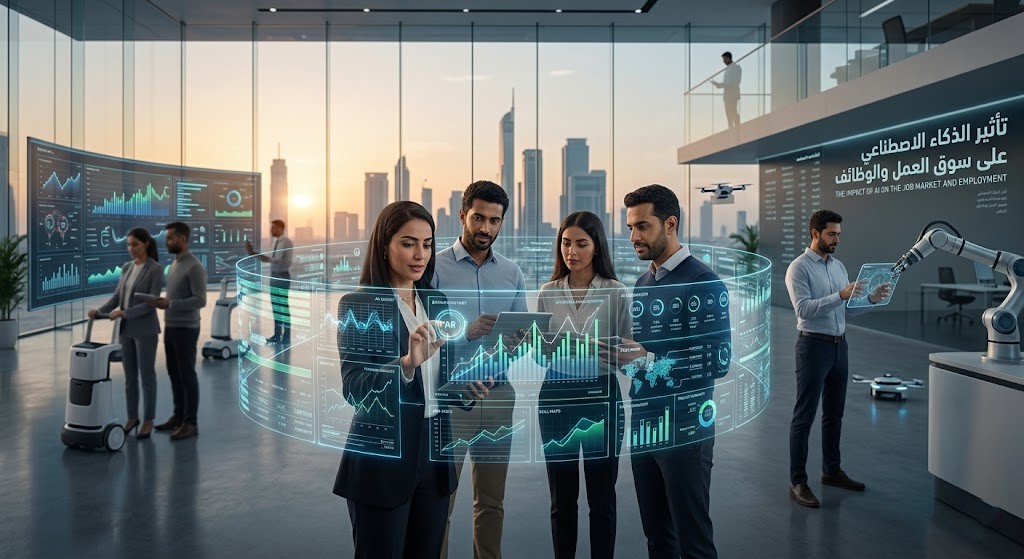
The Impact of Artificial Intelligence on the Labor Market and Jobs
The world is witnessing an unprecedented technological revolution led by artificial intelligence. This revolution is fundamentally reshaping the concepts of work and jobs. Explore with us how the global labor market is preparing for these fundamental transformations and what that means for the future of millions of workers and job seekers.

Secrets of Successful Investment in Global Stock Markets: A Smart Investor's Guide
Investing in global stock markets is a gateway to achieving wealth and growing capital, but it requires a deep understanding and well-thought-out strategies to overcome risks and seize opportune moments. This article unveils the fundamental principles and hidden secrets that enable investors to achieve rewarding returns in volatile international financial markets.