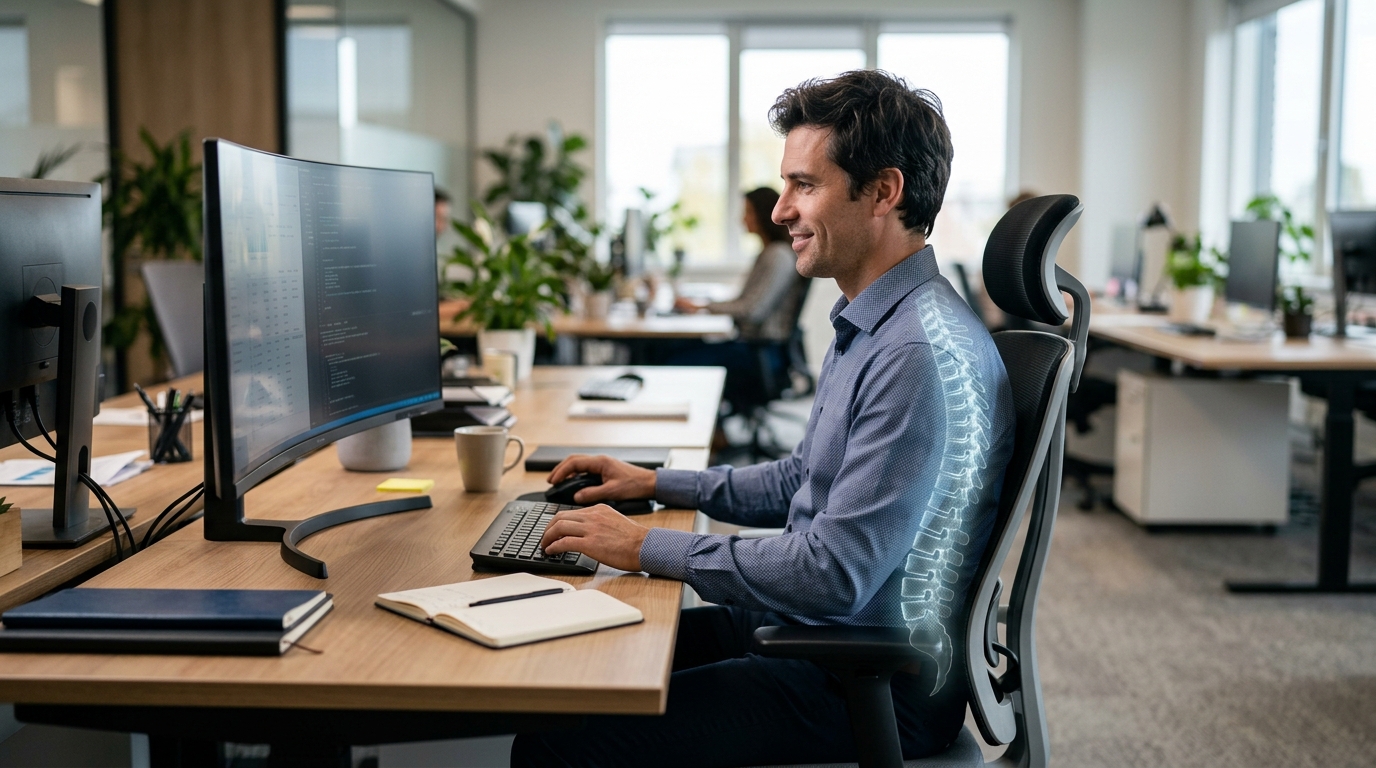
A Comprehensive Guide to Protecting Your Spine from Prolonged Sitting
Introduction
Amidst the accelerating technological development our world is witnessing today, screens have become an integral part of our daily lives, from smartphones and laptops to large television screens and gaming devices. These digital tools have radically changed our work, study, and entertainment patterns, offering us unprecedented efficiency and instant communication methods we never dreamed of before. However, alongside these numerous advantages, a hidden but serious health challenge emerges: the cumulative effect of prolonged sitting in front of screens on the health of our spine, which is the fundamental pillar of our bodies.
The spine is not just a collection of bones; it is the axis of movement and flexibility, and a protective shield for the spinal cord that connects the brain to the rest of the body, thus playing a vital role in every function we perform. When we spend long hours in incorrect sitting postures, we impose immense pressure on this complex structure, which can lead to chronic pain, deterioration in joint health, and neurological problems that can significantly negatively impact our quality of life. Therefore, understanding how to protect our spine from the harms of these digital habits becomes critically important, not just a luxury that can be postponed.
Background and Context
The nature of work and entertainment in the past did not require this much static sitting; most jobs required continuous physical movement, from agriculture and manual industries to business activities that necessitated constant travel. With the advent of the Industrial Revolution, office jobs began to emerge, requiring longer periods of sitting, but they did not reach the level of complete reliance on screens we see today. The digital revolution in recent decades has led to a massive acceleration in this transformation, where a large number of professions now require sitting for long hours in front of computers, while smartphones and tablets have become constant companions during leisure time as well.
From a biomechanical perspective, spinal loading differs significantly between standing and sitting, especially when adopting incorrect sitting postures. In a natural standing position, body weight is relatively evenly distributed across the spine and joints, whereas in a sitting position, pressure on the intervertebral discs in the lower back increases significantly, especially if the back is hunched or the shoulders are slumped. These continuous pressures lead to gradual wear and tear of the discs and joints, and chronic tension in the muscles surrounding the spine, paving the way for the emergence of pain and injuries.
The concept of "sitting disease" or "prolonged sitting syndrome" was not common in medical circles a few decades ago, but it has begun to gain widespread recognition as an urgent public health issue with increasing reliance on technology. Recent research indicates that sitting for long hours not only affects the spine but is also associated with an increased risk of heart disease, type 2 diabetes, obesity, and even some types of cancer. This growing awareness is prompting experts to seek comprehensive solutions and strategies to mitigate these multiple health risks, emphasizing the importance of continuous movement and healthy sitting.
Details and Key Facts
Recent statistics clearly show the magnitude of the problem, with the average adult spending between 7 to 10 hours daily in a sitting position, and this duration increases significantly for office workers or students who rely entirely on screens for their studies. According to some studies, these numbers have risen significantly after the COVID-19 pandemic, with the spread of remote work and study, exacerbating the challenges of prolonged sitting and its negative effects on general health, especially spinal health.
Back pain is one of the most common health complaints worldwide, with estimates suggesting that about 80% of adults will experience back pain at some point in their lives, and a significant percentage of these cases are directly related to prolonged sitting and poor posture. Office workers also report higher rates of neck, shoulder, and back pain, affecting their productivity and well-being daily. These numbers are not just statistics; they are indicators of a deteriorating quality of life for millions of people around the world.
The diseases and injuries that can result from prolonged sitting and incorrect postures are varied, and prominent among them are herniated discs in the neck and back, sciatica resulting from pressure on the sciatic nerve, in addition to Text Neck syndrome, which has become particularly common with excessive smartphone use. Prolonged sitting can also lead to weakness in the abdominal and gluteal muscles, and stiffness in the hip joints, creating a muscular imbalance that exacerbates spinal problems and increases the likelihood of chronic pain that is difficult to treat.
These health problems incur enormous economic costs, both at the individual level through treatment and healthcare expenses, and at the national level through lost productivity due to lost workdays and sick leave. Some studies estimate that the cost of back pain alone amounts to billions of dollars annually in developed countries, making it not just an individual health problem, but an economic and social challenge that requires a comprehensive response at all levels.
Impact and Importance
At the individual level, neglecting spinal health due to prolonged sitting means a significant deterioration in the quality of life. Chronic back or neck pain not only causes physical discomfort but also affects the ability to sleep, perform daily activities, and participate in hobbies and sports we once enjoyed. This can lead to a decline in physical fitness, weight gain, and even psychological effects such as stress, anxiety, and depression due to feelings of helplessness and constant pain, trapping the individual in a vicious cycle that is difficult to break free from.
At the societal and economic level, the increasing rates of spinal problems represent an enormous burden on healthcare systems. The need for doctor visits, physical therapy, pain medications, and in some cases surgical interventions, all require significant financial and human resources. Furthermore, the decrease in worker productivity due to pain and sick leave negatively impacts the national economy and hinders growth and development in various sectors, making this problem extend beyond the individual to become a societal challenge that must be dealt with seriously.
The impact of prolonged sitting is not limited to adults; it also extends to younger generations. With the increasing use of tablets and computers by children and adolescents for study and play, experts' concerns are growing about the emergence of spinal problems at an early age, which could affect their growth and physical development in the long term. This indicates that the issue is not just a contemporary problem, but a challenge that requires preventive and educational strategies starting from childhood to ensure the health of future generations.
From a global perspective, the importance of this issue is evident as a public health crisis that transcends geographical and cultural boundaries. With the accelerating pace of digitalization worldwide, developed and developing countries alike face increasing challenges related to occupational health and daily habits. This requires the exchange of experiences and knowledge, the development of global awareness programs, and the establishment of international standards for healthy work and learning environments, to ensure that the great benefits of the digital age do not come at the expense of human health and physical well-being.
Opinions and Analyses
From the perspective of orthopedic surgeons and physical therapists, the optimal solution lies in a combination of early prevention and effective treatment when necessary. Orthopedic doctors emphasize the importance of correct posture, whether sitting or standing, and the necessity of strengthening the body's core muscles that support the spine. They affirm that early intervention in case of any pain can prevent the problem from worsening and avoid the need for more complex medical procedures in the future, stressing the importance of regular check-ups and accurate diagnosis.
Physical therapists, on the other hand, focus on rehabilitation programs that include specific strengthening and stretching exercises to improve spinal flexibility and strengthen its supporting muscles. They also play a pivotal role in teaching individuals how to sit, stand, and walk healthily, and how to integrate movement into their daily routine. They believe that physical therapy is not only for treating injuries but is also a powerful tool for prevention, as it can help individuals develop correct movement habits that promote long-term spinal health.
From the perspective of ergonomics experts, the solution lies in designing the work environment to support spinal health rather than cause its deterioration. This includes using adjustable office chairs that provide good back support, computer screens placed at eye level to avoid neck bending, in addition to keyboards and mice designed to reduce pressure on the wrists and shoulders. They emphasize that investing in a healthy work environment is not only beneficial for employees but also increases productivity and reduces sick leave, which benefits employers as well.
From a behavioral science perspective, changing ingrained habits represents a significant challenge, as many are aware of the risks of prolonged sitting but find it difficult to implement the necessary changes. Behavioral experts suggest using regular reminders, such as smartphone apps that alert users to stand and stretch every hour, or scheduling short breaks for walking and stretching. They also encourage integrating movement into daily activities naturally, such as walking during phone calls or using stairs instead of elevators, to make movement an integral part of the daily routine.
Expectations and Future
As work models continue to evolve, hybrid and remote work are expected to continue to grow, meaning that more individuals will spend long hours in front of screens in home environments that may not be ergonomically designed. This trend necessitates an urgent need to raise awareness and provide resources and support for individuals to create healthy home work environments. We may see an increased demand for home ergonomics consultations and the development of flexible solutions that suit these new circumstances, to ensure continued productivity without compromising health.
On the technological front, we can expect the emergence of more innovative solutions to address the challenges of prolonged sitting. These solutions may include smart office chairs equipped with sensors that monitor posture and provide alerts for correction, or AI-powered adjustable desks that automatically adapt to user needs. Wearable devices could also play a larger role in monitoring physical activity and posture, and providing personalized recommendations to maintain spinal health, transforming technology from a problem creator to part of the solution.
In the future, the importance of public policies and educational programs in addressing this issue is likely to increase. These programs could include national awareness campaigns about the risks of prolonged sitting and the importance of movement, and the development of mandatory ergonomic standards in workplaces and schools. Companies could also adopt health and fitness programs for their employees, encourage active breaks, and provide work environments that support movement and physical activity, reflecting a cultural shift towards valuing physical health as an integral part of productivity and well-being.
Protecting our spinal health in the digital age is a long-term investment in our quality of life and productivity. As technological advancements continue, we must adapt and develop new strategies to maintain a healthy balance between our digital lives and our physical movement. This requires cooperation among individuals, employers, healthcare providers, and policymakers to create a health-supportive environment where everyone can benefit from the advantages of technology without sacrificing their physical health.
Conclusion
In conclusion, the spine represents a fundamental pillar of our existence and movement, and neglecting its health amidst immersion in the digital age is not an option we can afford. We have shown how prolonged sitting in front of screens, without sufficient awareness of correct posture and the importance of movement, can lead to a series of health problems that go beyond mere back pain to affect overall quality of life, and productivity and economy at both societal and global levels.
Protecting your spine begins with your personal awareness of the importance of this issue, and then taking practical and continuous steps to integrate movement into your daily routine, and improve your work and sitting environment. It doesn't always require radical changes; you can start with small steps such as taking regular breaks, performing simple stretching exercises, and investing in a comfortable chair and a screen placed at eye level. Always remember that prevention is better than cure, and investing in your health today is an investment in a pain-free future.
Let us embrace the challenges of the digital age with an open mind and an active body, benefiting from all the advantages technology offers, but with full responsibility and awareness of our physical health. Make your spinal health a priority, and be a role model for others in adopting healthy habits that support an active and comfortable digital life, to enjoy a life full of health, movement, and productivity, away from the harms of prolonged sitting in front of screens.
Related Articles

Five Subtle Signs You Urgently Need an Immediate Break
In today's fast-paced world, exhaustion has become a silent companion for many, often hiding behind the mask of excessive productivity and constant dedication. Ignoring the subtle warning signs your body and mind send can lead to severe consequences, making early recognition vital for maintaining your health and well-being.

Foods That Drain Your Daily Energy and Others That Double Your Focus: The Complete List
Our daily dietary choices form the cornerstone of our energy levels and our ability to concentrate. What we eat not only affects our physical health but also extends its profound impact to brain functions and overall cognitive performance. This article offers a comprehensive guide that reveals the foods that drain your vitality and those that enhance your mental clarity, empowering you to make informed dietary decisions that transform your day for the better.

Freeing the Mind from Screen Chaos: Restoring Calm in Seven Days
In a world drowning in the noise of digital screens, the need to restore mental clarity has become more urgent than ever before. This article offers a practical roadmap to regain your inner calm and free your mind from digital clutter in just one week, revealing its profound impact on the quality of our lives.