Secrets to Effectively Integrating Physical Activity into Your Busy Professional Life
Introduction: The Modern Era's Challenge
Amidst the rapid developments our contemporary world is witnessing, the pace of professional life has become faster and more demanding than ever before, placing immense pressure on individuals to accomplish more in less time. This lifestyle, often characterized by long hours spent sitting in front of computer screens and continuous meetings, creates a significant gap between urgent work requirements and the fundamental need to maintain sound physical and mental health. Many find themselves in a constant struggle between the desire for professional advancement and a growing awareness of the importance of physical activity, prompting them to seek practical solutions that enable them to balance these two vital aspects.
Physical activity is no longer merely a recreational option or a side hobby; it has transformed into an imperative necessity for maintaining quality of life and effectively facing daily challenges. Neglecting this basic need can lead to a decline in general health, reduced energy and concentration levels, and an increased risk of chronic diseases, negatively impacting both professional performance and personal happiness. Therefore, understanding how to intelligently and flexibly integrate physical activity into a busy routine is not just health advice, but a comprehensive strategy to enhance productivity and achieve the desired balance in individuals' lives.
Background and Context: Modern Man's Struggle with Time
The nature of work has undergone a radical transformation over the decades. While most professions once required significant physical effort, the vast majority of modern jobs are now office-based and centered around prolonged sitting. This shift, which began with the Industrial Revolution and accelerated dramatically with the Digital Revolution, has led to the creation of a work environment characterized by a lack of movement and inactivity, directly contradicting the physiological makeup of humans, who are designed for continuous movement and activity. The accumulation of daily sitting hours without adequate compensation through physical activity represents a major health challenge facing contemporary society as a whole.
This problem is exacerbated by social and economic pressures that drive individuals to spend longer hours at work, often extending beyond official working hours due to the ease of accessing work tools from anywhere, at any time. The lines between professional and personal life have blurred, making it seem impossible to allocate time for physical activity amidst a busy schedule filled with meetings, deadlines, and family responsibilities. This environment, which encourages mental and physical exhaustion, necessitates a comprehensive re-evaluation of how we approach health in the context of work.
The health consequences of this lifestyle have become clear and alarming, with studies indicating rising rates of obesity, cardiovascular diseases, type 2 diabetes, in addition to mental health issues such as anxiety and depression, all linked to a lack of physical activity. It is no longer limited to merely feeling tired; it now threatens long-term quality of life and reduces individuals' life expectancy. Therefore, understanding the roots of this problem and its historical and social context is the first step towards finding sustainable and effective solutions.
Key Details and Facts: Shocking Numbers and Possible Solutions
Global statistics paint a worrying picture regarding physical activity levels in modern societies. According to the World Health Organization, more than a quarter of adults worldwide do not engage in sufficient physical activity, and some studies indicate that office workers spend an average of 9-10 hours daily in a sitting position, far exceeding the recommended hours for movement and activity. These figures are not just dry data; they are crucial indicators of a silent health crisis creeping into our daily lives, threatening to undermine public health and individual and societal productivity alike, necessitating serious and immediate interventions.
In contrast to these alarming facts, the scientifically proven benefits of regular physical activity are numerous and not limited to the physical aspect alone. It improves brain function, increases concentration and alertness, reduces stress and anxiety levels, enhances sleep quality, and boosts overall mood thanks to the release of happiness hormones. Furthermore, physical activity contributes to building a strong immune system and reducing the risk of chronic diseases such as high blood pressure, diabetes, and some types of cancer, thereby increasing life expectancy and significantly improving quality of life.
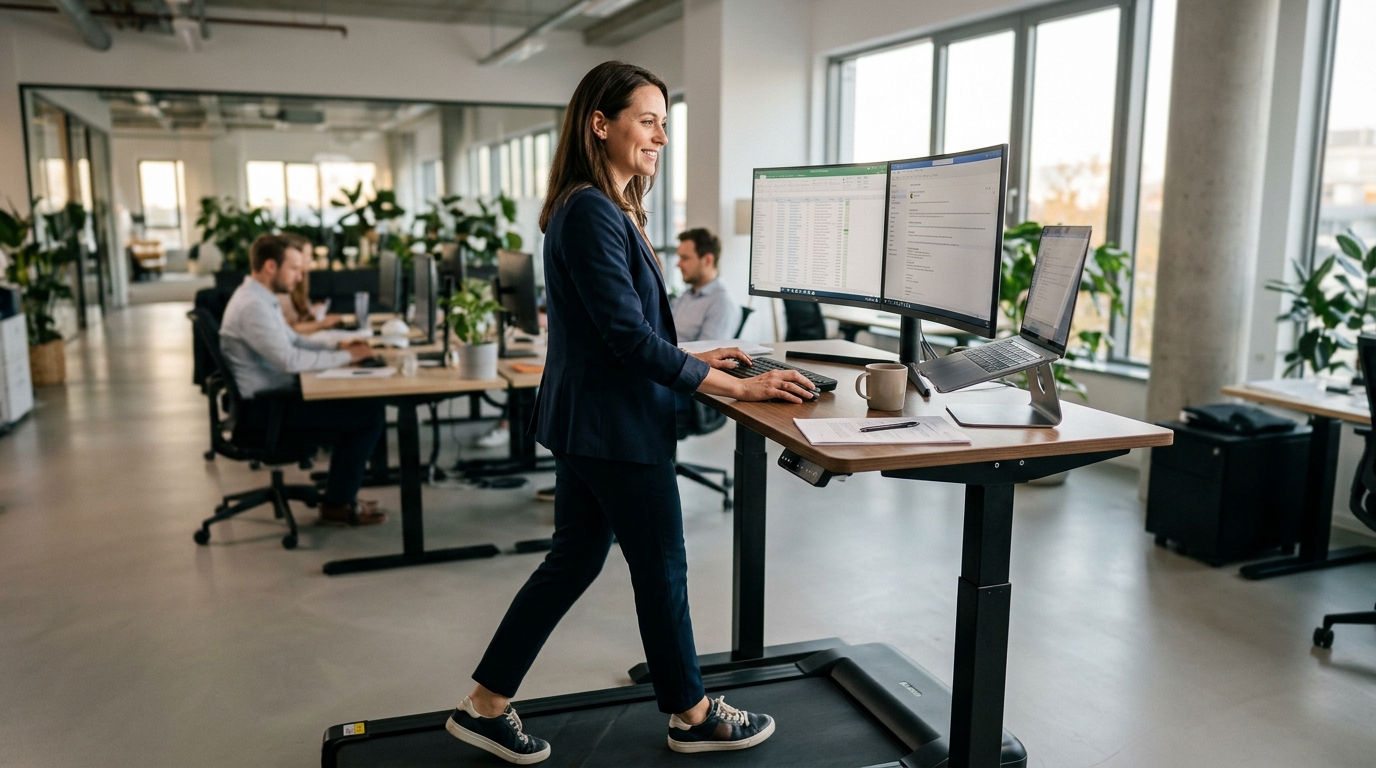
Fortunately, integrating physical activity into a busy routine does not require a commitment to long hours in gyms; it can be achieved by adopting simple and effective strategies. Employees can use standing desks, walk during phone calls, take the stairs instead of the elevator, or take short breaks every hour for light stretching exercises. Company managers can also encourage walking meetings or provide dedicated spaces for physical activity within the work environment, contributing to building a healthy culture that supports wellness and productivity simultaneously, and making movement an integral part of the daily work environment.
Impact and Importance: Local and Global Dimensions
Integrating physical activity into a busy professional lifestyle carries profound positive effects that extend from the individual to society as a whole, as improvements in employee health directly reflect on their performance and productivity. More active employees enjoy higher energy levels, greater ability to concentrate, and fewer sick days, leading to increased overall efficiency for the organization. A sense of well-being also enhances job satisfaction and reduces employee turnover rates, saving companies recruitment and training costs and fostering a stable work environment.
At the organizational and economic level, investing in employee health represents a wise investment that benefits both companies and nations. Companies that adopt comprehensive health programs for their employees observe a significant reduction in healthcare costs, an improvement in team morale, and an increase in innovation and collaboration. This positive impact is not limited to individual companies but extends to national economies by reducing the burden on public healthcare systems and increasing an active and productive workforce, thereby driving comprehensive economic development.
Globally, international organizations such as the World Health Organization are paying increasing attention to promoting physical activity as an essential part of public health strategies. An active life is no longer just an individual recommendation but has become a fundamental principle in global health policies, with repeated calls to design pedestrian and cyclist-friendly cities, provide green spaces, and encourage companies to adopt wellness programs. These joint efforts aim to create environments that support physical activity, enabling individuals from all walks of life, including those with busy professions, to easily and smoothly integrate movement into their day, contributing to building healthier and more vibrant communities.
Opinions and Analyses: Expert Insights and Multiple Perspectives
Health and sports science experts emphasize that the secret to effectively integrating physical activity into a busy lifestyle lies in consistency and flexibility, not necessarily in intensity or long duration. Dr. John Ratey, a professor of psychiatry at Harvard University, stresses that even short, intermittent periods of activity, such as walking for 10 minutes several times a day, can make a significant difference in physical and mental health. This perspective alleviates the pressure on individuals to find long periods for exercise and opens the door to practical solutions that fit busy schedules, focusing on building small, healthy habits that can be maintained in the long term.
On the other hand, human resources specialists and organizational psychologists believe that the role of companies in fostering a culture of wellness is no less important than individual efforts. Companies that invest in wellness programs, such as providing in-house gyms, subscribing to fitness club memberships, or organizing walking challenges among employees, contribute to creating a supportive work environment for health. Furthermore, providing flexible working hours, encouraging regular breaks, and organizing meetings that do not require sitting all the time can make a fundamental difference in employees' activity levels and job satisfaction, enhancing company loyalty and increasing team productivity.
Behavioral sciences and psychology offer valuable insights into how to overcome psychological barriers that prevent individuals from exercising regularly, such as procrastination or feeling overwhelmed. It is recommended to adopt the principle of "small beginnings" and set realistic, achievable goals, in addition to using self-motivation techniques such as setting rewards or joining support groups. Integrating physical activity with daily activities, such as listening to a podcast while walking or meeting friends for a stroll instead of sitting in a cafe, can make exercise more enjoyable and sustainable, helping to embed it as a natural part of the daily routine without feeling like an additional burden.
Expectations and Future: Towards More Dynamic Work Environments
The future is moving towards greater integration of smart technologies in promoting physical activity, with wearable devices such as smartwatches and fitness trackers witnessing amazing developments. These devices not only monitor steps and calories but also provide movement reminders, track sleep patterns, and offer personalized analytics to improve physical performance. With the evolution of artificial intelligence, we expect the emergence of smarter virtual fitness coaches capable of adapting to individuals' needs and busy schedules, making personalized guidance more accessible and convenient than ever before.
Institutional wellness programs are expected to undergo a qualitative transformation, becoming more comprehensive and personalized. Instead of merely offering gym memberships, companies will move towards designing integrated wellness programs that include motivating fitness challenges, workshops on healthy nutrition, psychological support, and even dedicated spaces for rest and meditation within the work environment. The goal is to create an institutional culture that values health as an integral part of productivity, providing employees with the tools and resources necessary to maintain their physical and mental fitness, benefiting both employees and companies.
In terms of urban planning and public policies, there is growing awareness of the importance of designing cities and work environments that encourage movement and activity. We expect to see more initiatives to expand walking and cycling paths, create more usable parks and green spaces, and design buildings in ways that encourage the use of stairs instead of elevators. These structural changes, along with policies that support flexible working hours and encourage active breaks, will contribute to creating a future where physical activity is not an option, but a natural and integrated part of the daily fabric, ensuring better health and higher productivity for future generations.
Conclusion: A Call to Action and Change
In conclusion, it is clear that effectively integrating physical activity into a busy professional lifestyle is not just a challenge to be overcome, but a real opportunity to enhance quality of life and productivity in the long term. Facts and analyses have proven that caring for physical health is not a luxury that can be dispensed with, but a necessary investment in oneself, positively reflecting on all aspects of existence, from professional performance to personal relationships and overall happiness. Adopting small, consistent healthy habits can make a tremendous difference, transforming daily exhaustion into renewed energy and continuous vitality.
Therefore, the call is directed to you, dear reader, to begin your journey towards a more active and vibrant life. Do not wait for the perfect moment; every small step, every positive decision, and every minute of movement is an investment in your health and future. Start by setting realistic goals and utilize the opportunities available in your day, whether it's taking the stairs, walking during breaks, or even doing stretching exercises at your desk. Remember that building habits takes time and effort, but the results you will reap are worth all the trouble, as they will give you the ability to face life's challenges with confidence and renewed energy.
Finally, this change must be a shared responsibility among individuals, institutions, and communities. Companies must recognize the vital role they play in promoting the health of their employees by providing supportive work environments that encourage physical activity. Policymakers must continue their efforts to design cities that encourage movement and provide safe and accessible spaces for everyone. Together, we can build a future where professional success does not conflict with physical health, but rather they integrate to form the foundation for a life full of achievement and well-being, ensuring that future generations are healthier, happier, and capable of reaching their full potential.
Related Articles
Five Subtle Signs You Urgently Need an Immediate Break
In today's fast-paced world, exhaustion has become a silent companion for many, often hiding behind the mask of excessive productivity and constant dedication. Ignoring the subtle warning signs your body and mind send can lead to severe consequences, making early recognition vital for maintaining your health and well-being.

Foods That Drain Your Daily Energy and Others That Double Your Focus: The Complete List
Our daily dietary choices form the cornerstone of our energy levels and our ability to concentrate. What we eat not only affects our physical health but also extends its profound impact to brain functions and overall cognitive performance. This article offers a comprehensive guide that reveals the foods that drain your vitality and those that enhance your mental clarity, empowering you to make informed dietary decisions that transform your day for the better.

Freeing the Mind from Screen Chaos: Restoring Calm in Seven Days
In a world drowning in the noise of digital screens, the need to restore mental clarity has become more urgent than ever before. This article offers a practical roadmap to regain your inner calm and free your mind from digital clutter in just one week, revealing its profound impact on the quality of our lives.